MASAP is the next generation of food production infrastructure
Smart, modular aquaponics systems designed for reliable, climate-independent farming.
The Challenge
Why Food Production Must Evolve
Food production is entering a decade defined by climate instability, water scarcity and rising operational costs. Small and mid-sized producers — the backbone of local food systems — face increasing pressure to remain viable while delivering safe, affordable and sustainable food.
At the same time, consumer demand is rapidly shifting toward clean, locally produced, chemical-free food. Farmers are expected to reduce pesticides and synthetic inputs, yet they must do so while maintaining yields and economic stability — a transition that is often complex, risky and slow.
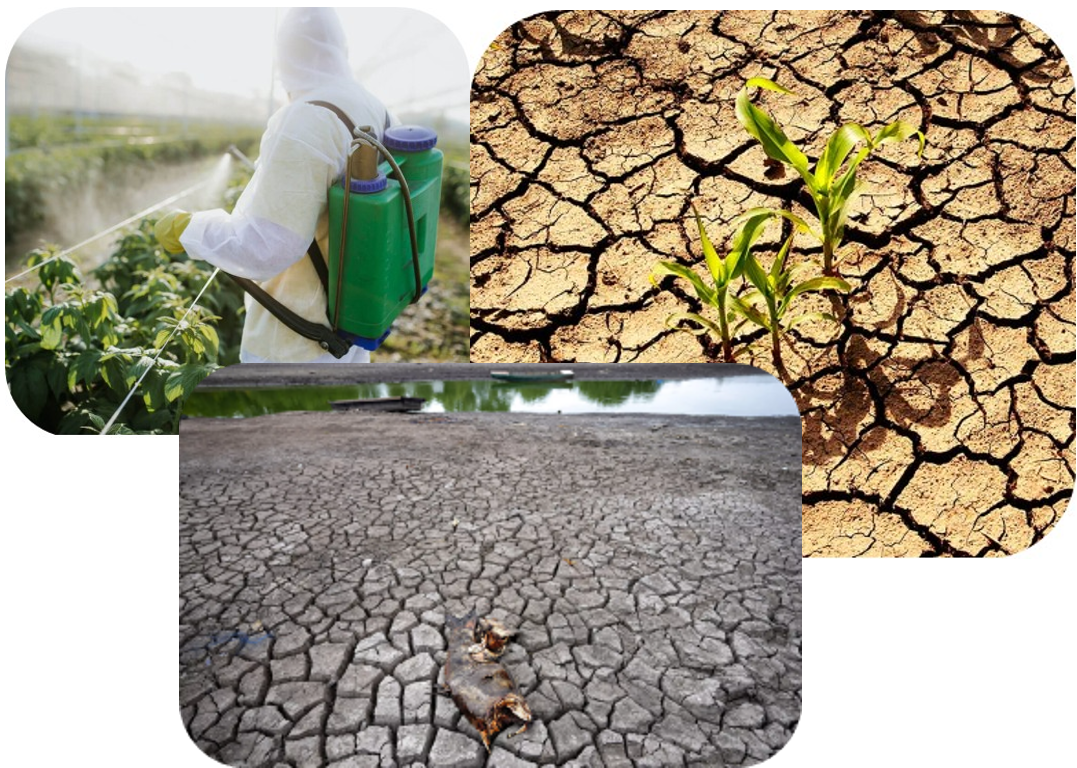
Conventional agriculture remains highly dependent on unpredictable weather patterns. Droughts, heatwaves and irregular rainfall increasingly disrupt harvests, while irrigation losses and declining freshwater availability make reliable production harder each year.
Decades of chemical inputs have degraded soils and polluted groundwater, reducing long-term productivity. As a result, local production struggles to meet demand, and many regions become increasingly dependent on imports, longer supply chains and higher food prices.
A different production model is required — one that is controlled, resource-efficient and independent of climate volatility.
How the Aquaponics Ecosystem Works
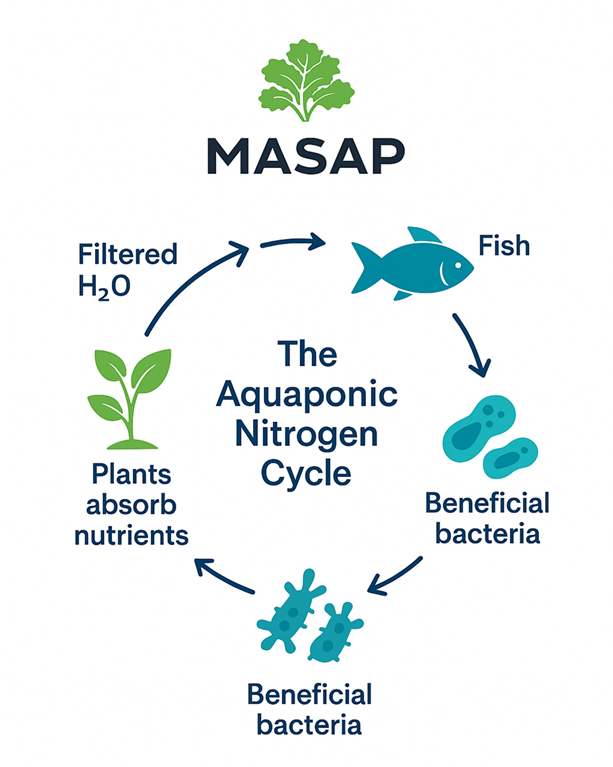
Aquaponics combines fish cultivation and soil-free plant growing into a single closed-loop biological system that mimics natural nutrient cycling.
Fish naturally produce nutrients. Beneficial bacteria convert these compounds through the nitrogen cycle into plant-available forms. Plants absorb the nutrients and purify the water, which then returns clean to the fish tanks.
When engineered correctly, this balanced ecosystem produces stable outputs with minimal discharge. It reduces water consumption, eliminates synthetic fertilizers and prevents chemical runoff.
Because nutrients are continuously available and environmental conditions are controlled, plants grow faster, develop stronger root systems and are naturally more resilient to stress. Once balanced, the system requires significantly less daily intervention than traditional soil farming, enabling predictable and low-maintenance production.
In practice, aquaponics enables:
- Efficient nutrient generation without chemicals
- Minimal water loss through recirculation
- Reduced environmental pressure.
- Combined outputs of vegetables and fish.
- Stable, year-round production.
The MASAP Engine
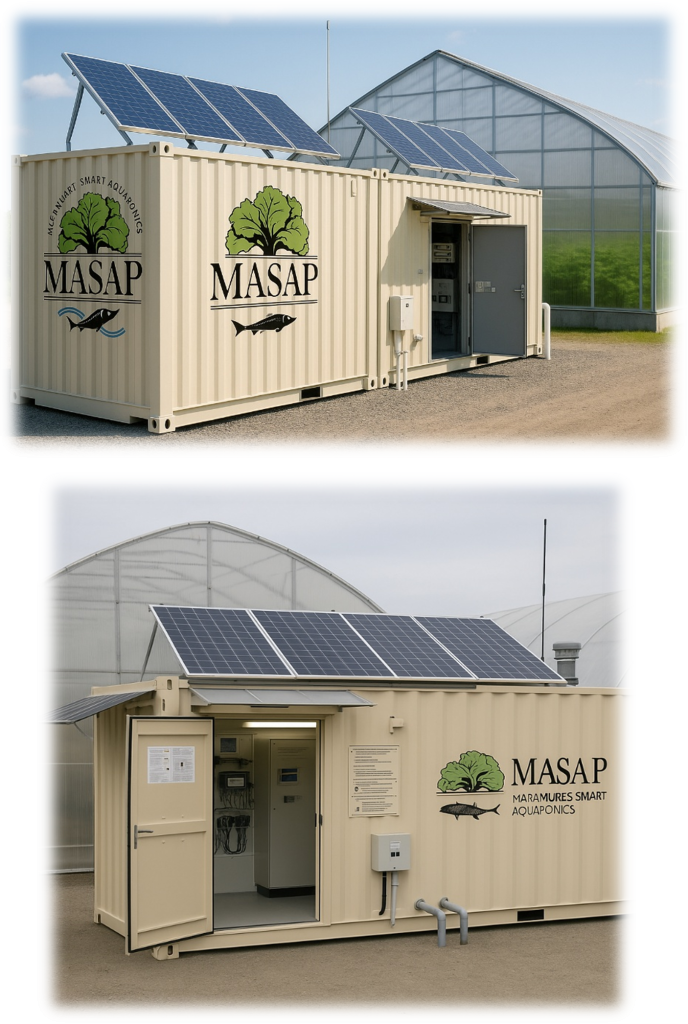
MASAP develops standardized aquaponics systems integrated inside industrial containers, designed for reliable daily operation and professional deployment anywhere.
Each container houses the complete biological and technical core of a farm: fish production, biofiltration, water recirculation, environmental monitoring and automated control. The system continuously generates nutrient-rich water through natural biological processes and supplies plants with everything they need to grow — without synthetic fertilizers or pesticides.
IInstead of rebuilding land or installing complex infrastructure, the container connects directly to a greenhouse or protected growing space.
The greenhouse becomes the growing area. MASAP becomes the engine that powers it.
Design to be ease to operate and deploy
|
The system is designed to be simple to operate and easy to scale. Automation manages feeding, water circulation and environmental control, while intelligent monitoring continuously tracks temperature, oxygen, pH, nutrients and plant performance. This reduces manual work and ensures stable production without requiring specialized aquaponics expertise.

Each unit operates as a self-contained module and can be replicated or combined with additional containers to increase capacity. Layouts can be adapted to different crops, fish species and greenhouse configurations.
MASAP is also designed for resource efficiency and low environmental impact. Integrated energy systems, including solar and battery storage, enable high energy independence and support near-zero operational emissions.
Achievements
|

• Participated in the ClimAccelerator powered by Impact Hub, among 14 early-stage green startups in Romania.
• Selected in the SCION Accelerator (Bulgaria & Romania), a NatureTech cleantech programme supporting early-stage climate and nature solutions.


• Completed an EIT Food entrepreneurship programme, focused on validating the business model and market fit for sustainable agrifood solutions.
• Featured in national media, including a segment in ProTV – “I Like IT”, presenting our aquaponics-based approach to sustainable food production (tech & innovation focus).

Our Team
|

Alexandru Iuga
Co-Founder & Chief Operation Officer

Bogdan Iuga
Founder & Chief Executive Officer

Ligia Roman
Co-Founder & Chief Financiar Officer

Rolan Ciolan
Fish Expert Advisor

Mihai Puia
Agricultor Expert Advisor

Andreea Daradici
Sustainability Expert Advisor

Daniel Donici
CEO Artesana, MASAP Advisor

Stefan Andrei
Industry Expert
CONTACT US
|
Let’s Build the Next Generation of Local Food Infrastructure
If you are a greanhouse operator or farm interested in deployable aquaponics infrastructure, contact us for documentation, pilot details and deployment discussions.
Company Information
MaramuArt Smart AquaPonics S.R.L.
Registration No. 46454439
Bucharest, Romania
Prahova, Poenarii Vechi
